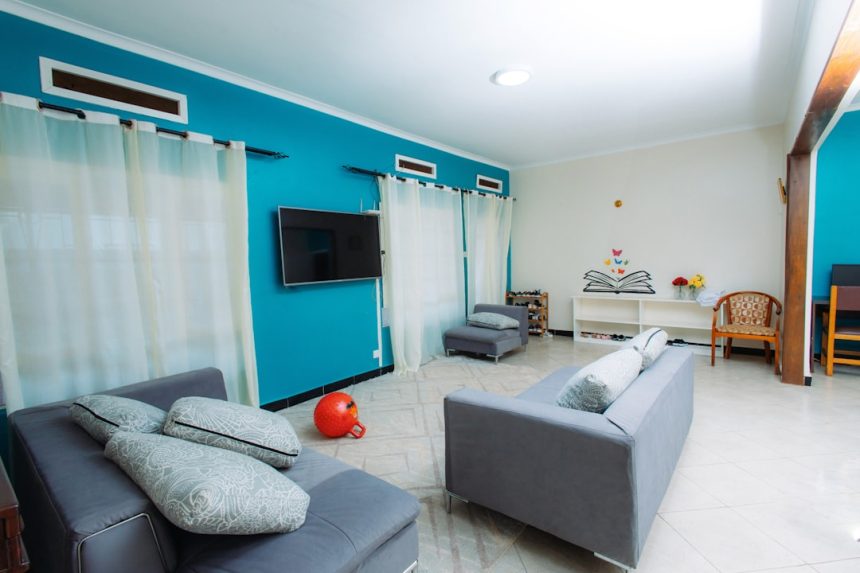
Movie night can get messy fast. Someone gets the comfy middle seat. Someone else sits on the side. Then the side person says, “Why does the screen look weird?” That is the big viewing angle problem. Some TVs look great from the front, but sad from the side.
TLDR: OLED TVs usually offer the best viewing angles. They keep colors rich and contrast strong, even when you sit off to the side. IPS LED TVs are also good, but their blacks are weaker. VA LED and many Mini LED TVs can look amazing from the front, but they often lose quality at wider angles.
What Are Viewing Angles?
A viewing angle is how far to the side you can sit while the picture still looks good.
Imagine your TV is a stage. The best seat is right in the center. That is where most TVs look their best. But real life is not a theater chart. People sit on couches. Kids sit on the floor. Friends sit in random chairs. Someone always ends up near the snack table.
When you move away from the center, a TV may change in a few ways:
- Colors fade. Red may look pink. Blue may look gray.
- Blacks get lighter. Dark scenes look washed out.
- Contrast drops. The picture loses punch.
- Brightness changes. The image may look dimmer.
- Details vanish. Shadows can become muddy.
Good viewing angles mean the picture stays steady from many seats. Bad viewing angles mean only the center seat gets the good stuff.
Why Viewing Angles Matter
Viewing angles matter more than people think. A TV can have giant size. It can have 4K. It can have smart apps. It can have more buzzwords than a cereal box. But if the picture looks poor from your couch, it is a problem.
You should care about viewing angles if:
- You have a wide sofa.
- You host sports nights.
- Your room has seats on the side.
- Your kids watch from the floor.
- Your TV is in a kitchen or open room.
- You move around while watching.
If you always sit straight in front, viewing angles matter less. If your room is full of people, they matter a lot. Think of it like pizza. One slice in the middle is not enough for everyone.
The Main TV Technologies
There are many TV labels. It can feel like alphabet soup. OLED. QLED. Mini LED. LCD. IPS. VA. It sounds like a robot sneeze.
But for viewing angles, we can keep it simple. Most TVs fall into a few important groups:
- OLED
- QLED or LED with VA panels
- LED with IPS panels
- Mini LED
- MicroLED
Each one handles side viewing in a different way. Let us meet the players.
OLED: The Viewing Angle King
OLED stands for Organic Light Emitting Diode. Fancy name. Simple idea. Each pixel makes its own light. Each pixel can also turn off completely.
That is why OLED TVs have amazing black levels. If a part of the picture is black, that area can be truly black. Not dark gray. Not “almost black.” Black black.
OLED is also excellent from the side. You can sit far off center and still get strong color. Contrast stays solid. The image keeps its rich look. It does not panic when your uncle takes the weird chair by the wall.
OLED viewing angle strengths:
- Colors stay accurate from wide angles.
- Contrast stays strong.
- Blacks remain deep.
- Great for groups.
- Great for wide rooms.
OLED is not perfect, of course. It can cost more. Some OLED models are not as bright as the brightest Mini LED TVs. There is also a small risk of burn in if the same image stays on screen for a very long time. Think news logos or game menus. Modern OLED TVs are much better at preventing this, but it is still worth knowing.
Still, for viewing angles, OLED is usually the champ. It is like the friend who looks good in every photo.
QLED and VA LED: Great From the Front, Tricky From the Side
QLED is usually a type of LED LCD TV with a quantum dot layer. That layer helps make colors brighter and more vivid. Many QLED TVs use VA panels.
VA stands for Vertical Alignment. Again, fancy name. The key point is this: VA panels often have strong contrast when viewed straight on. Blacks can look deep. Bright scenes can pop. Movies can look dramatic.
But side viewing is where things get messy.
When you sit off to the side, many VA TVs lose color and contrast. The picture may look faded. Blacks may become gray. The magic leaks out like air from a balloon.
VA panel strengths:
- Strong contrast from the center.
- Good black levels for LCD.
- Often bright.
- Good for movie watchers who sit straight ahead.
VA panel weaknesses:
- Poorer viewing angles.
- Colors can shift from the side.
- Contrast drops off quickly.
- Not ideal for wide seating.
Some high end VA TVs use special layers to improve viewing angles. These can help a lot. But they may reduce contrast a little. Also, they are often found on pricier models.
So, QLED with VA can be wonderful. Just give it the royal center seat.
IPS LED: The Friendly Side Seat Option
IPS stands for In Plane Switching. It is another type of LCD panel. IPS TVs are usually better than VA TVs when viewed from the side.
Colors hold up better. The image stays more stable. People sitting off center get a nicer picture. That sounds great, right?
Yes, but there is a trade off.
IPS panels often have weaker black levels. In a dark room, black areas can look gray. Contrast may feel flatter. A scary movie may look less scary. The monster is still there, but now it looks like it came from a brightly lit office.
IPS strengths:
- Better viewing angles than VA.
- Good for bright rooms.
- Good for sports with friends.
- Good for casual family viewing.
IPS weaknesses:
- Weaker blacks.
- Lower contrast.
- Less cinematic in dark rooms.
IPS is a friendly choice for wide seating. It is not the king of contrast. But it shares the picture better with the whole room.
Mini LED: Bright and Powerful, But It Depends
Mini LED is a type of LCD TV backlight. It uses many tiny LEDs behind the screen. These tiny lights can dim in zones. This can improve contrast and brightness.
Mini LED TVs can get very bright. They are great in sunny rooms. They can make HDR content sparkle. Explosions look big. Sunsets look bold. Nature documentaries look like the planet is showing off.
But viewing angles depend on the panel type. Many Mini LED TVs use VA panels. That means they can still have limited side viewing. Some models add wide angle filters. Those help. But not all Mini LED TVs have them.
Mini LED strengths:
- Very bright picture.
- Great HDR impact.
- Better black levels than basic LED TVs.
- Good for bright rooms.
Mini LED viewing angle notes:
- VA Mini LED models may fade from the side.
- Wide angle layers can help.
- Blooming can appear around bright objects.
- OLED still usually wins for side viewing.
Mini LED is a powerful choice. But do not assume it has great viewing angles just because it is expensive. Always check reviews. Or better, see it in a store from the side.
MicroLED: Amazing, Rare, and Very Expensive
MicroLED is a dream technology. Like OLED, each pixel can make its own light. It can offer great brightness, deep blacks, and excellent viewing angles.
Sounds perfect. So why not buy one today?
Because MicroLED TVs are still rare and very expensive. They are not normal living room purchases for most people. They are more like “I own a yacht for my other yacht” purchases.
In theory, MicroLED can compete with or beat OLED in many areas. It can be very bright. It does not have the same burn in worries as OLED. Viewing angles are also excellent.
But for most shoppers, MicroLED is not a realistic option yet. It is exciting. It is the future. It is also probably not going in your cart this weekend.
So, Which TV Has the Best Viewing Angles?
The simple answer is OLED.
OLED offers the best mix of wide viewing angles, deep blacks, rich colors, and strong contrast. It is the safest choice if people sit all around the room. It is also great for movie lovers who care about picture quality.
Here is the basic ranking:
- OLED: Best overall viewing angles for most people.
- MicroLED: Excellent, but rare and very expensive.
- IPS LED: Good side viewing, but weaker contrast.
- Mini LED with wide angle layer: Can be good, model dependent.
- VA LED or QLED: Great straight on, weaker from the side.
This ranking is not about every part of TV quality. It is only about viewing angles. A VA Mini LED TV may beat an OLED in brightness. An IPS TV may cost less. A QLED may look fantastic in the center. But for wide seats, OLED usually wins.
Best TV Type for Different Rooms
Not every room needs the same TV. Your room shape matters. Your seating matters. Your habits matter too.
For a wide living room: Choose OLED if your budget allows. Everyone gets a good view.
For a bright family room: Consider Mini LED. Pick a model with good viewing angle performance if seats are spread out.
For a sports room: OLED is great for groups. IPS LED can also work well if you want to save money.
For movie nights in the dark: OLED is hard to beat. VA Mini LED can also look great if you sit in the center.
For a narrow room: VA QLED or Mini LED may be fine. If everyone sits straight ahead, poor side angles matter less.
For a kitchen or open space: IPS or OLED is useful. People walk around. Side viewing matters.
How to Test Viewing Angles Before Buying
You do not need lab gear. You do not need a white coat. You just need your eyes and a little patience.
Try this simple test in a store:
- Stand in front of the TV.
- Look at faces, colors, and dark areas.
- Slowly walk to the side.
- Watch what changes.
- Check if colors fade.
- Check if blacks turn gray.
- Check if the picture loses punch.
Do not only watch bright demo videos. Stores love those. Bright fruit. Bright birds. Bright cities. Very sneaky. Try to view darker scenes too. Dark scenes reveal weak contrast faster.
If shopping online, read professional reviews. Look for measured viewing angle tests. Also read owner comments. Search for phrases like “color washout,” “side viewing,” and “wide seating.”
Quick Myths About Viewing Angles
Myth 1: Bigger TVs always have better viewing angles.
Nope. Size does not fix panel behavior. A huge VA TV can still fade from the side.
Myth 2: 4K means good from every seat.
No. 4K is about resolution. Viewing angle is about picture stability from the side.
Myth 3: Expensive always means wide viewing angles.
Not always. Some expensive TVs focus on brightness and contrast, not side viewing.
Myth 4: All QLED TVs are the same.
No. QLED is a broad label. Panel type and extra filters matter a lot.
The Final Verdict
If you want the best viewing angles, buy an OLED TV. It keeps the picture beautiful from more seats. It is great for families, friends, sports, movies, and people who refuse to sit still.
If OLED is too pricey, look at an IPS LED TV for good side viewing on a budget. Just know that black levels will not be as strong. If you mostly sit straight ahead, a VA QLED or Mini LED TV can be a fantastic choice. It may even look brighter and punchier from the front.
The best TV is not just the one with the coolest sticker. It is the one that fits your room. So think about your seats. Think about your crowd. Think about the person stuck at the far end of the couch. They deserve good color too.
Bottom line: For wide viewing angles, OLED is the champion. For center seats, VA and Mini LED can shine. For budget wide seating, IPS is friendly. Choose the TV that makes every seat feel like the good seat.