
In the pantheon of American literature and journalism, few figures are as provocative and enduring as Hunter S. Thompson. Best known as the father of “Gonzo journalism,” Thompson’s unique way of embedding himself into stories and distorting traditional journalistic structures left an indelible mark on how stories could be told. But beyond the psychedelic narrative flair and anti-establishment bravado lies a deeper, quieter contribution—his perspective on how photography captures not just moments, but truths about society itself. At the heart of this philosophy is a pitch he once made, not just for an article, but for an angle on life. It was a pitch that said more about the evolving relationship between observer, subject, and culture than perhaps he ever intended.
TLDR:
Hunter S. Thompson’s pitch revealed a profound commentary on the role of photography in society. He believed that cameras are not just tools to record reality but instruments that challenge and often distort how we perceive truth. Thompson’s approach, which injected subjectivity into visual storytelling, prefigured modern concerns about authenticity and media bias. Fundamentally, his ideas compel us to question not what we see in a photograph, but why we see it that way.
The Man, The Myth, The Camera
When Hunter S. Thompson pitched story ideas, he wasn’t just promoting content—he was promoting a philosophy. One of his lesser-discussed proposals involved embedding photography within his stories not merely as documentation, but as commentary. Thompson didn’t see the camera as a passive observer of life. Instead, he viewed it as an active participant in the social theatre.
In a now-famous anecdote, Thompson once described the camera as a kind of weapon—a cultural scalpel used to dissect reality and reassemble it under a harsh light. He wasn’t simply interested in capturing events; he was interested in what those images meant. His approach hints at several larger truths:
- Photography is not objective. Like language, it is shaped by the eye, the intent, and the biases of the person behind the lens.
- The presence of a camera changes behavior. Once someone is aware they are being watched, their performance becomes part of the image.
- Images construct history. What gets photographed—and what doesn’t—can shape our understanding of the past and guide our expectations of the future.
A New Lens on Authenticity
Thompson understood long before social media and deepfakes that photographs could lie—sometimes more convincingly than words ever could. What he emphasized, however, was not the *manipulation* of images, but their subjectivity. Even a raw, unedited photo tells a selective story: it chooses a moment, an angle, and a frame. This selectivity is inherently biased, even when it appears natural.
By encouraging photographers—his companions in Gonzo journalism—to interact with the subjects, or even become subjects themselves, Thompson was pioneering a style of visual storytelling that rejected distance. He believed proximity bred clarity, not confusion.
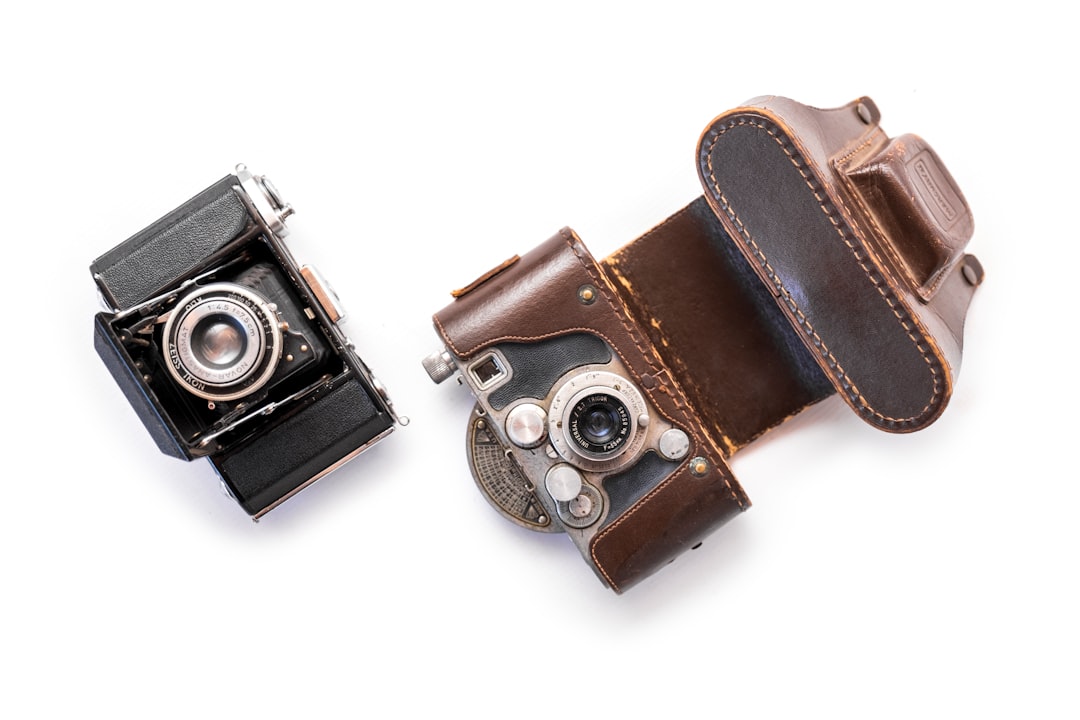
In that way, his pitch dramatically reshaped how journalism—and by extension, society—would view photography:
- From objectivity to immersion: The myth of the neutral observer was dismantled, encouraging a more embedded, experiential style.
- From witness to participant: The photographer was no longer merely a recorder but an influence on the event.
- From documentation to narrative: The image was not a document but a story, crafted with intent and bias.
The Social Mirror of Photography
To understand what Thompson’s pitch says about society, we must examine the dual function of photography: as evidence and as expression. On one hand, photographs serve as objective proof—a soldier kissing a nurse in Times Square, people walking on the moon. On the other, they are subjective impressions—protestors with hands raised, a mother in despair during the Great Depression.
Thompson inclined toward the latter. He believed those expressive images revealed more about the collective emotional states of a nation than any article ever could. He once described photographs as “emotional weather reports,” snapshots of the zeitgeist rather than the event.
That idea has become truer in the 21st century, where platforms like Instagram and TikTok transform photos and video snippets into cultural currency. In a world flooded with images, the camera’s function has shifted. Rather than simply documenting *what* happened, images now establish why it mattered.
To Thompson, photography was a radical act—an act of choosing what to see and what to show others. That’s a subtle but powerful control, and one we should not underestimate.
The Evolution of Visual Credibility
One of the more prescient aspects of Thompson’s ideology was his suspicion of visual “truth.” In today’s environment, that suspicion has exploded into a full-blown crisis of credibility:
- Deepfakes alter what we believe is possible.
- AI-generated images redefine creativity and reality.
- Selective framing drives political and ideological narratives.
Thompson would have likely viewed these developments not as technological threats, but as logical extensions of what he already knew: that truth in photography is conditional. It’s not what happened—it’s what someone decided to show happened.

In our current media landscape, the implications are profound. We’ve become accustomed to questioning written narratives, but we often still trust images. Thompson’s pitch was a clarion call to question everything—even what appears in the light of day.
Photography as Protest, as Presence
Photography, in Thompson’s view, was not neutral. It was inherently political. From war zones to civil rights marches, the camera didn’t just bear witness; it influenced outcomes. Sometimes, the presence of a photojournalist deterred violence. Other times, it inflamed it. In either case, photography was power.
This remains true today. Think of the image of George Floyd’s final moments or the haunting pictures from Ukraine’s war-torn cities. These are not just photographs; they are calls to action. They show how the lens directs not just attention, but policy, protest, and public sentiment. Thompson recognized that even decades ago, in his chaotic, typewriter-banging way.
The Observer’s Responsibility
If there’s a takeaway from Thompson’s photographic angle, it’s that photographers—and by extension, all content creators—have a profound responsibility. Being behind the lens doesn’t absolve one from ethical consideration. Thompson didn’t believe in hiding behind a camera; he believed in facing forward, acknowledging bias, and using it transparently.
That concept feels particularly urgent in the current era, where everyone with a phone is a photographer and every image uploaded can shape reputations, elections, and even lives. Thompson would argue that this democratization of the lens is both liberation and liability.
Conclusion: The Frame and the World
Hunter S. Thompson’s pitch on photography wasn’t just a media tactic—it was a sociological lens focused on truth, performance, and power. He understood that framing an image meant framing reality. By rejecting the myth of photographic objectivity, he pushed both viewers and creators to grapple with what they saw—and why they saw it that way.
In doing so, Thompson didn’t just expand the boundaries of journalism; he widened the aperture through which we see ourselves. His ideas challenge us to be more critical, more self-aware, and ultimately, more responsible with the images we create and consume.
As he might say: The camera never lies—but it never tells the whole truth either.