
Modern organizations face a growing gap between what customers expect and what traditional software can deliver. An AI agents development company helps close that gap by building intelligent systems that can reason, act, learn, and collaborate across business workflows. Instead of relying only on static automation, companies can deploy AI agents that handle complex tasks, support employees, and improve decision-making at scale.
TLDR: An AI agents development company can transform a business by creating intelligent digital workers that automate tasks, analyze data, and interact with customers or internal teams. For example, a mid-sized eCommerce company using AI agents for support and order management could reduce response times by 65% and lower manual ticket handling by 40%. These agents can improve productivity, reduce operational costs, and help teams focus on higher-value work. The result is a more agile, data-driven, and customer-focused organization.
What AI Agents Bring to Modern Business
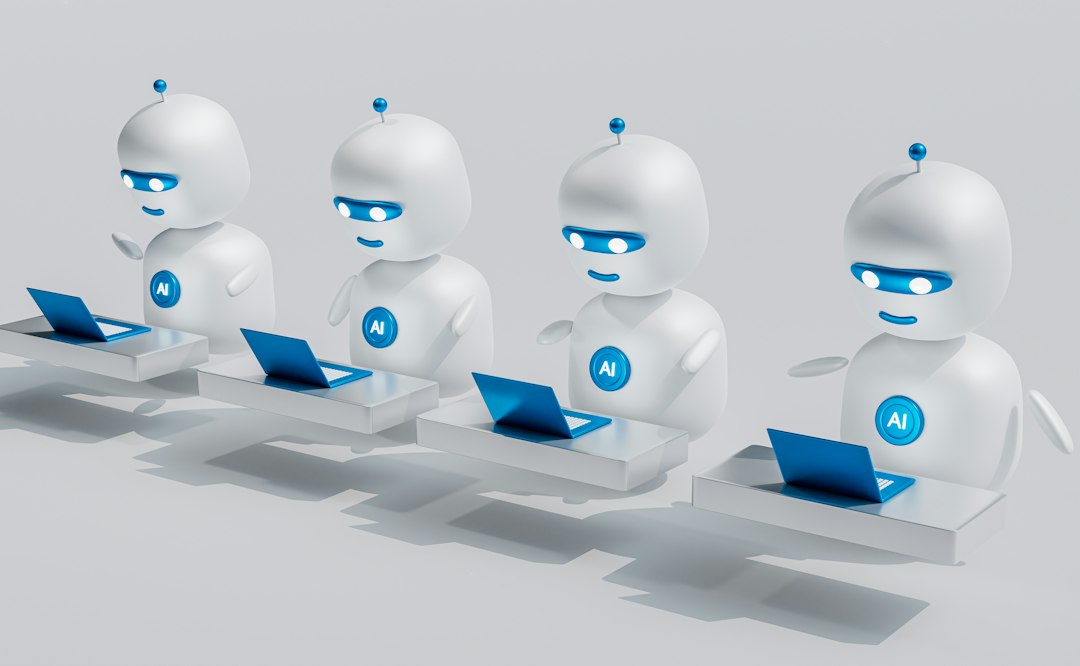
AI agents are software systems designed to perform tasks with a level of autonomy. Unlike basic chatbots or rule-based automation tools, they can interpret information, choose actions, connect to business systems, and adapt based on context. A well-designed agent may read customer messages, check inventory, update a CRM, generate a response, and escalate complex cases to a human employee.
An experienced development company does more than build a simple AI interface. It studies the company’s workflows, identifies high-impact automation opportunities, selects the right AI models, integrates the agents with existing platforms, and sets up monitoring for performance and safety. This makes AI adoption more practical and less risky.
Improving Operational Efficiency
One of the most immediate benefits of AI agents is operational efficiency. Many organizations lose thousands of hours each year to repetitive tasks such as data entry, report generation, email routing, invoice checks, meeting summaries, and internal ticket management. AI agents can take on these activities continuously, without fatigue or inconsistent output.
For example, in a finance department, an AI agent can review incoming invoices, compare them with purchase orders, detect anomalies, and prepare approval notes. In human resources, another agent can screen candidate profiles, schedule interviews, and answer common employee policy questions. These improvements do not simply save time; they also reduce errors and create more predictable workflows.
- Faster task completion: AI agents can process requests in seconds rather than hours.
- Lower administrative burden: Employees spend less time on repetitive work.
- Improved accuracy: Agents follow defined processes and flag inconsistencies.
- Scalable operations: More work can be handled without proportionally increasing headcount.
Enhancing Customer Experience
Customer experience is another area where AI agents can create meaningful transformation. Customers now expect quick, accurate, and personalized service across multiple channels. A custom AI agent can support live chat, email, messaging apps, and voice interfaces while maintaining a consistent understanding of each customer’s history.
Unlike generic support bots, custom agents can be trained around a company’s products, policies, tone of voice, and escalation rules. They can answer product questions, recommend services, track orders, process returns, and create support tickets. When an issue requires human judgment, the agent can summarize the conversation and pass it to the right employee.
This combination of automation and human support often leads to faster resolutions and stronger customer satisfaction. A support team may become more productive because agents handle routine requests, while human representatives focus on sensitive or complex cases.
Turning Data Into Action
Most businesses already collect large volumes of data, but many struggle to use it effectively. AI agents can help transform scattered information into useful insights. They can monitor dashboards, analyze trends, detect unusual activity, and recommend next steps based on business objectives.
For instance, a sales-focused AI agent might analyze CRM data and identify accounts that are likely to churn. It could then notify account managers, suggest outreach messages, and schedule follow-ups. A marketing agent may compare campaign performance, identify underperforming audiences, and recommend budget adjustments.

This ability to move from data observation to data action is one of the most valuable outcomes of AI agent development. Organizations gain not just analytics, but practical support in applying those insights.
Custom AI Agents Versus Off-the-Shelf Tools
Many companies begin their AI journey with ready-made tools. These can be useful for simple tasks, but they often lack deep integration with existing systems and unique business processes. An AI agents development company can build tailored solutions that reflect the organization’s structure, goals, security requirements, and customer expectations.
Custom agents can connect with tools such as CRMs, ERPs, knowledge bases, help desks, billing platforms, and internal databases. They can also follow company-specific approval rules, compliance policies, and communication standards. This makes them far more relevant for businesses with specialized operations or regulated environments.
The greatest value of customization is alignment. The AI agent is not just a tool added to the business; it becomes part of how the business operates.
Supporting Better Decision-Making
AI agents can help leaders and managers make better decisions by reducing information overload. Instead of manually reviewing spreadsheets, reports, and disconnected dashboards, decision-makers can rely on agents to summarize key developments and highlight important risks or opportunities.
A management agent might prepare daily executive briefings, compare performance against targets, and provide scenario-based recommendations. In logistics, an agent may detect delivery delays and suggest alternative routes or suppliers. In retail, an agent could analyze demand patterns and recommend stock adjustments before shortages occur.
This does not replace human leadership. Instead, it gives leaders better visibility, faster analysis, and more time to focus on strategy.
Strengthening Security and Compliance
Business transformation through AI must be responsible. A professional AI agents development company can design systems with security, compliance, and governance at the center. This includes access controls, audit logs, data protection, model monitoring, and human approval checkpoints for sensitive actions.
For industries such as healthcare, finance, insurance, and legal services, these safeguards are essential. AI agents must be reliable, transparent, and aligned with regulatory expectations. Development experts can help ensure that agents do not expose sensitive information, make unauthorized decisions, or operate outside approved boundaries.

Creating a Competitive Advantage
Businesses that adopt AI agents early can gain an important advantage. They can respond faster to customers, operate with leaner processes, test ideas more quickly, and adapt to market changes with greater confidence. Over time, AI agents can become a core part of digital transformation strategy.
The value is not limited to cost reduction. AI agents can support new revenue opportunities by enabling personalized sales journeys, faster product research, improved customer retention, and smarter service delivery. When developed properly, they help companies become more innovative and resilient.
How the Development Process Usually Works
An AI agents development company typically begins with discovery. It reviews business goals, workflows, systems, pain points, and success metrics. After that, it designs agent architecture, selects models, prepares data, builds integrations, and tests the agent in controlled environments.
- Discovery: Identifying use cases with measurable value.
- Strategy: Defining agent roles, permissions, and workflows.
- Development: Building and integrating the AI agents.
- Testing: Validating accuracy, safety, and reliability.
- Deployment: Launching agents into business operations.
- Optimization: Monitoring results and improving performance over time.
Conclusion
An AI agents development company can transform a business by turning AI from a general concept into a practical operational advantage. Through intelligent automation, personalized customer interactions, actionable analytics, and secure system integration, AI agents can reshape how organizations work. Companies that invest in well-designed AI agents are better positioned to improve efficiency, serve customers, and compete in increasingly digital markets.
FAQ
What does an AI agents development company do?
It designs, builds, integrates, and optimizes AI agents that perform business tasks autonomously or semi-autonomously. These agents may support customer service, operations, sales, finance, HR, analytics, and other departments.
How are AI agents different from chatbots?
Chatbots usually respond to questions, while AI agents can take actions, use tools, access systems, analyze context, and complete multi-step workflows. An AI agent may include chatbot capabilities but is generally more advanced.
Which businesses can benefit from AI agents?
Businesses in eCommerce, finance, healthcare, logistics, SaaS, education, real estate, manufacturing, and professional services can benefit. Any organization with repetitive processes, large data volumes, or customer interaction needs may find value in AI agents.
Are custom AI agents expensive to develop?
The cost depends on complexity, integrations, data requirements, and security needs. However, many companies start with one high-impact use case and expand after proving return on investment.
Can AI agents replace employees?
AI agents are most effective when they support employees rather than replace them entirely. They handle repetitive and time-consuming tasks, allowing human teams to focus on judgment, creativity, strategy, and relationship-building.